
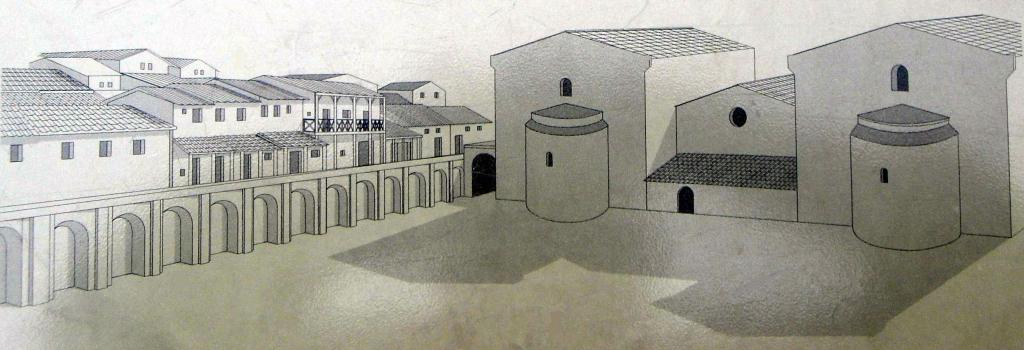
- Name of the site: Thermes antiques de Lyon – Rue des Farges
- Place: Lyon, France
- Period: Roman Empire (Approx. 1st century CE)
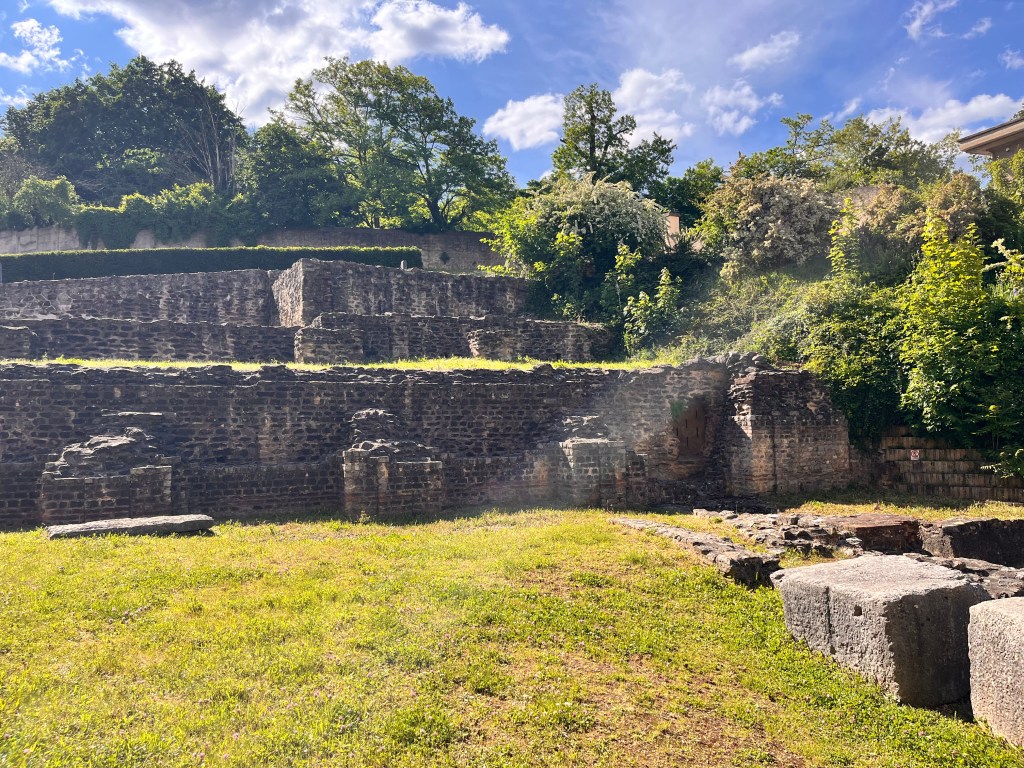
- What I love about it: No tourists, and the ruins blend into the modern buildings that now cover the hillside, serving as the background for a nice courtyard. Roman bath complexes are always fascinating because they offer a glimpse into everyday life. The surviving retaining wall is solid evidence of how skilled the Romans were with geotechnical engineering.
- Recommended visit? Only if you really enjoy small ancient sites with no flashy features.
- Bonus: Right across the street, you can also stop by the Église Saint-Just de Lyon, a beautiful (but slightly worn), 16th-century church.
I’ve recently realized that I live just a few metro stops away from one of the most important Roman archaeological sites in the world: the Roman theatre of Lyon (or Lugdunum), in Fourvière. I moved to Lyon a little over two months from Paris (an incredible city full of history, though not particularly rich in Gallo-Roman sites), so I am still finding my way around the city. It is indeed very different from Paris, and I have the impression that there is overwhelmingly more ancient and medieval sites to explore. Lugdunum was, after all, the largest and most important city in Roman Gaul. In contrast, Lutetia (Paris), located further north, was a smaller and less prominent settlement during most of the Roman period, only rising in significance much later. The fact that it is sunnier than Paris also helps being outside more often. 🙂
I had visited the site in Fourvière before but now that I live here, I have more time to explore it properly. This weekend, I took a friend who was visiting from out of town, and I was so amazed by the site (and so frustrated by how hard it was to climb the hill…) that I decided to go back again after work this week.
I took the metro to Vieux Lyon and decided to walk up the hill instead of taking the funiculaire. The sun was strong, but it was very comfortable to walk. A perfect spring day.
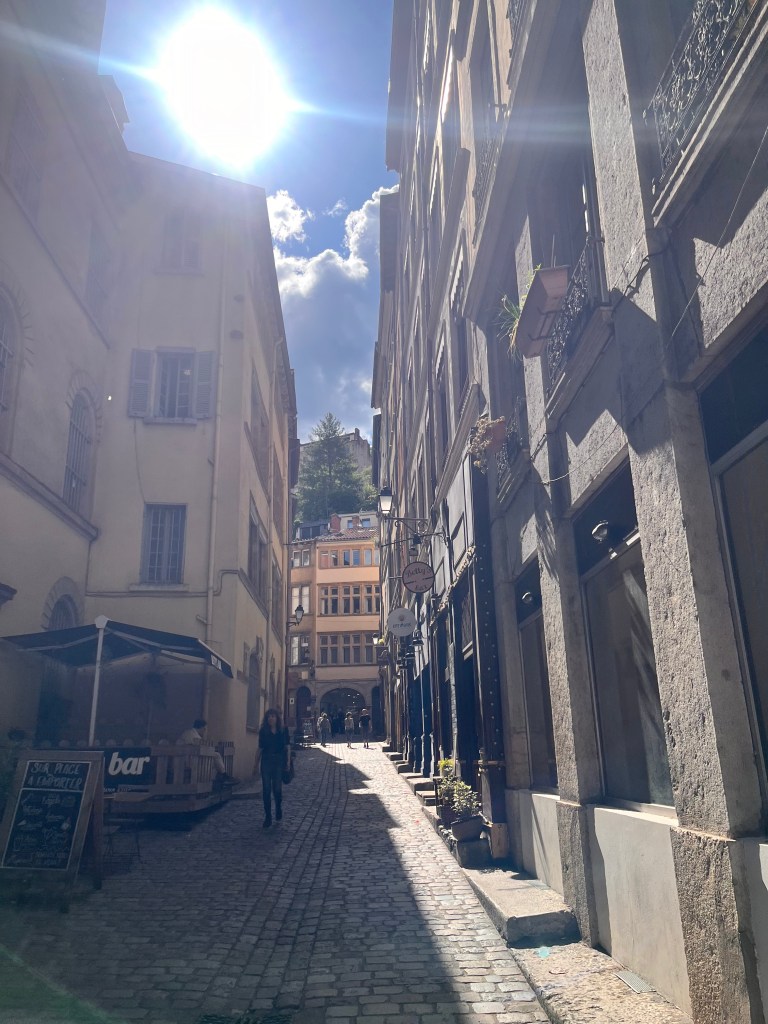
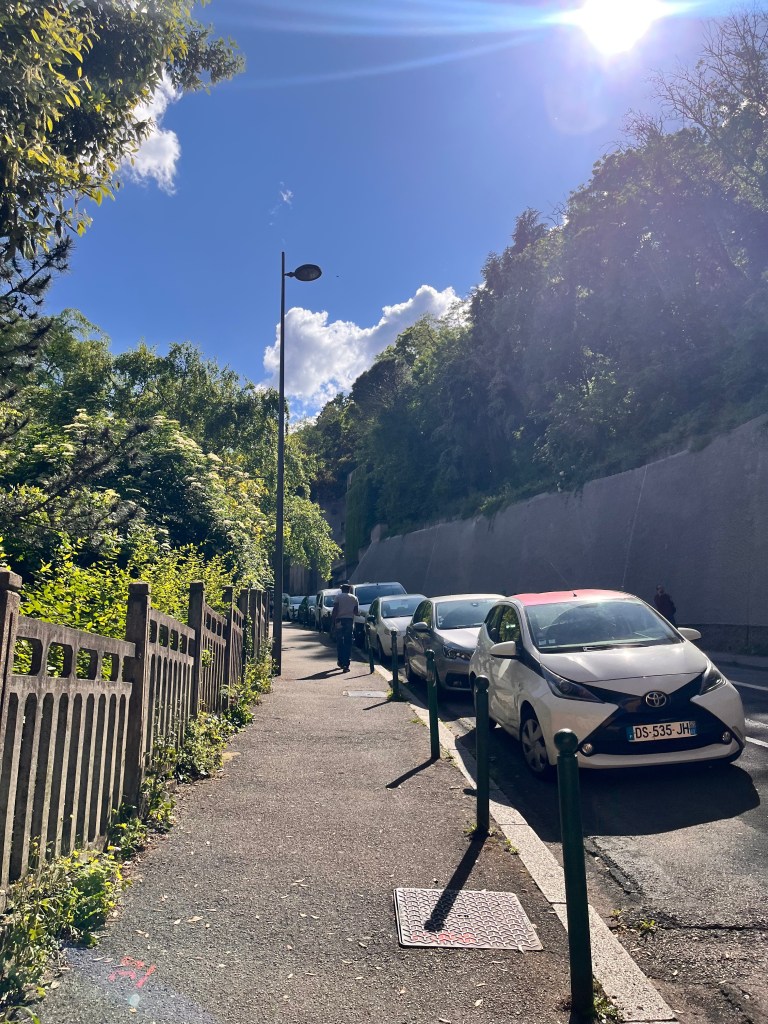
The way up the hill was easier than I expected, maybe because I wasn’t having a heated (positive) debate while walking like in the weekend when visiting with my friend and boyfriend.
When I arrived at Place des Minimes, I decided first to check the Roman Baths (Thermes Antiques de Lyon) before going to the main site of the Théâtre. I took a left at the square, and found the ruins hidden inside the courtyard of a modern residential building.


The ruins lie between a school and a large residential building. From the information available, it seems the municipal administration bought part of the land to create the small square and covered the remaining structures to turn the area into a green space. The main visible features are a section of the thermes (the most striking an apsis, apparently facing the palaestra) and a large wall. It’s a very peaceful place and I was the only person there. I’ll have to return another time after doing more research.

As I left the square with the ruins and got back to the main road, I found myself in front of the Église Saint-Just de Lyon, a 16th-century church built right on top of the old Roman necropolis. Quite a striking sight.

 Archaeo Notes
Leave a comment