
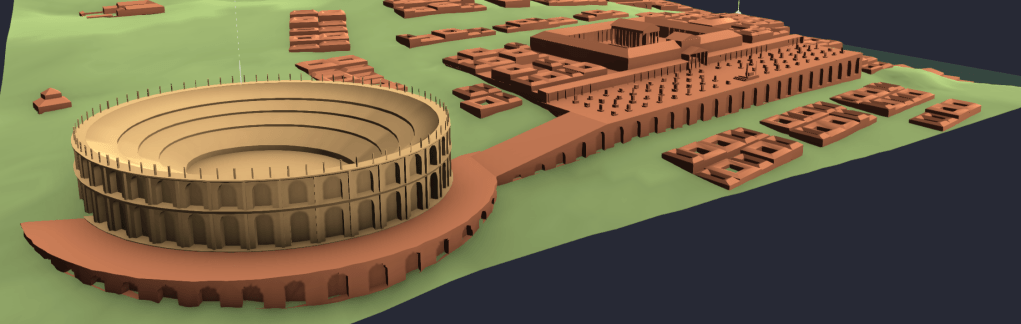
On Friday afternoon, I decided to visit the so-called Amphitheater of the Three Gauls of Lugdunum (Amphithéâtre des Trois Gaules). I found the name intriguing, but I had no idea what it referred to (apart from the obvious fact that it’s a Gallo-Roman amphitheater).
The amphitheater is located in a part of Lyon called La Croix-Rousse, the second-highest hill in the city after Fourvière.

In Lugdunum, that area was called Condate, a Gaullois name referring to a confluence of rivers. In Ancient times, the topography of the city looked quite different: while nowadays the confluence of the Rhône and the Saône are south of the Presqu’île, at the time they met right south of the Croix-Rousse. What is now Presqu’île was more like a swampy area. The cute but dated drawing below shows it clearly (the Theatre I visited earlier this week was in the other Plateau, of la Fourvière).

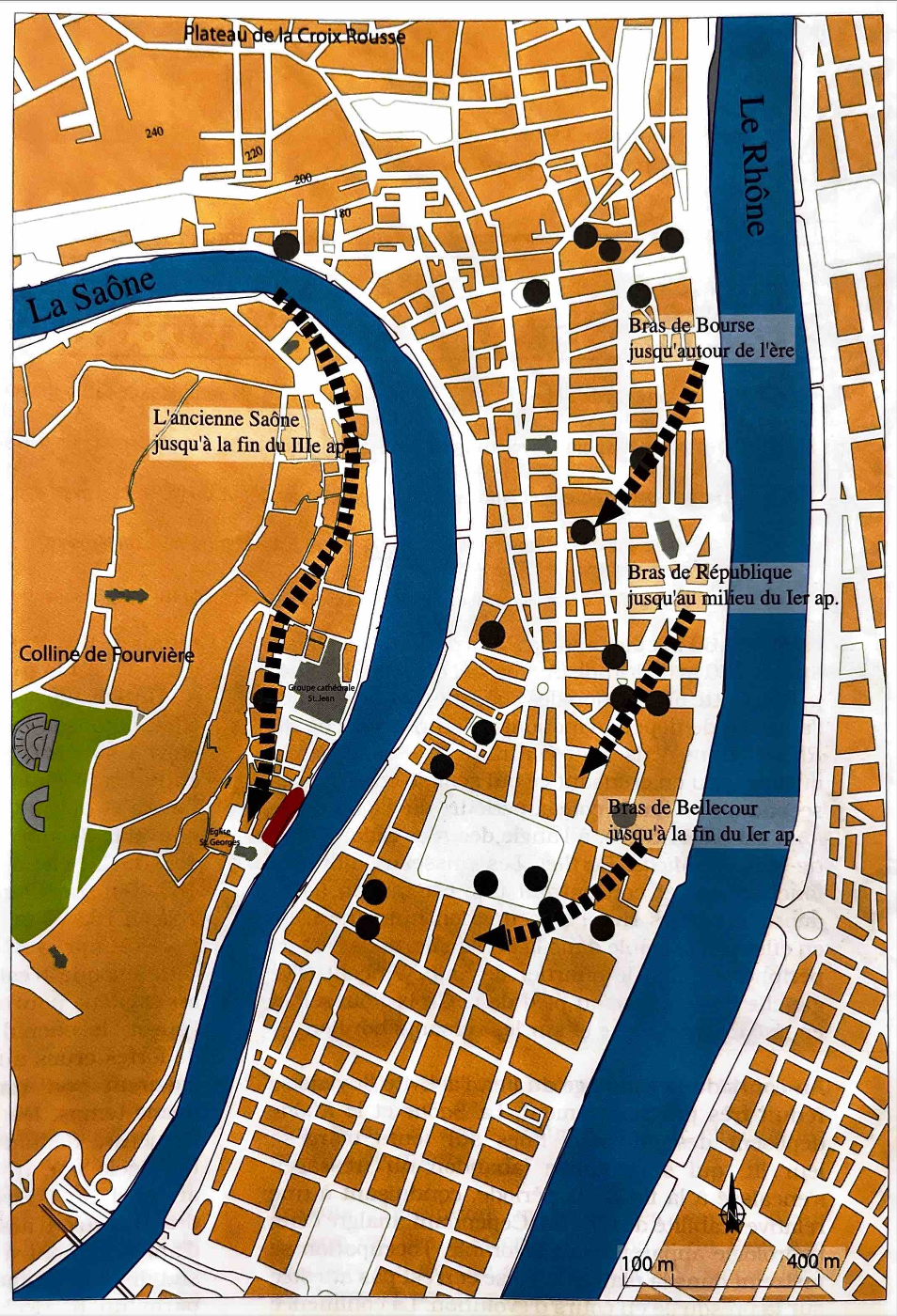
A cute (though dated) map on the left shows the courses of the rivers in ancient Lyon. The map on the right compares the ancient river paths with the modern city layout.
On my way to the Gaelic Condate, I passed in front of the City Hall, which was decorated in commemoration of the International Day Against Homophobia, Biphobia and Transphobia – that same day! Lyon is a very cool place.

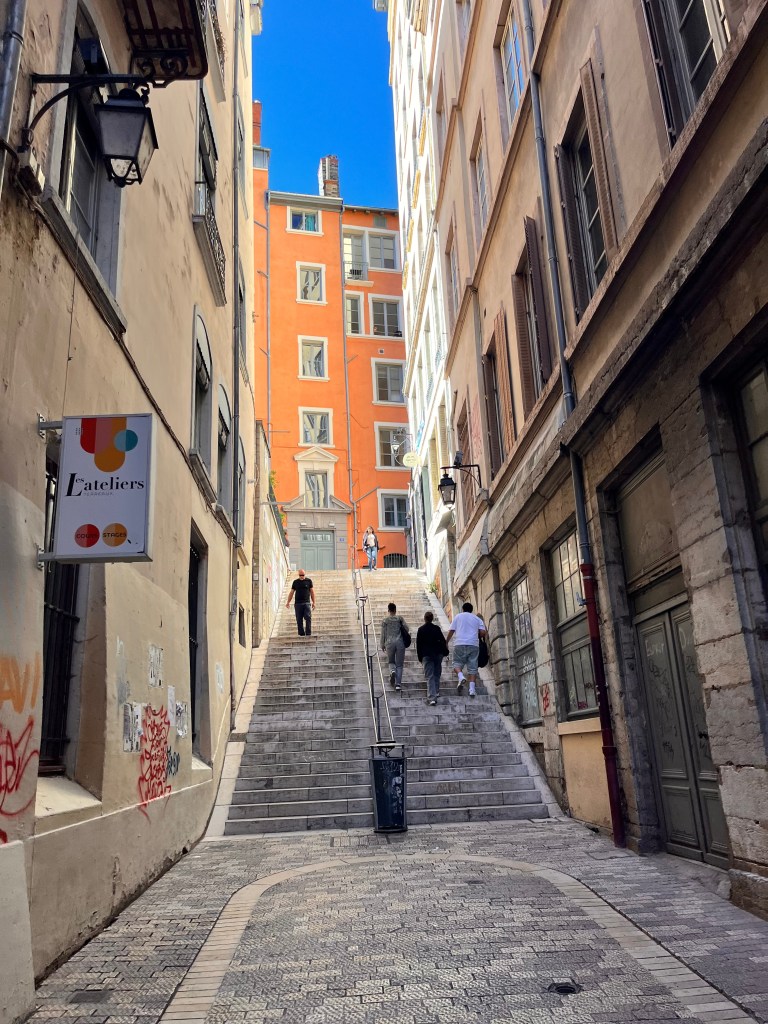
The way to the amphitheater gave quite some Italy vibes, very lovely.
When I arrived, they were preparing the site for an event that would take place later that day. Initially I was a bit disapppointed since the chairs and food trucks obstructed the view of the ampitheater. But then I realized that this was quite lucky, since apparently the amphitheater is usually closed for visitation (only possible to see from outside). Because of this event I had the chance to enter and explore!

A beautiful but damaged sign game some basic info about the site.
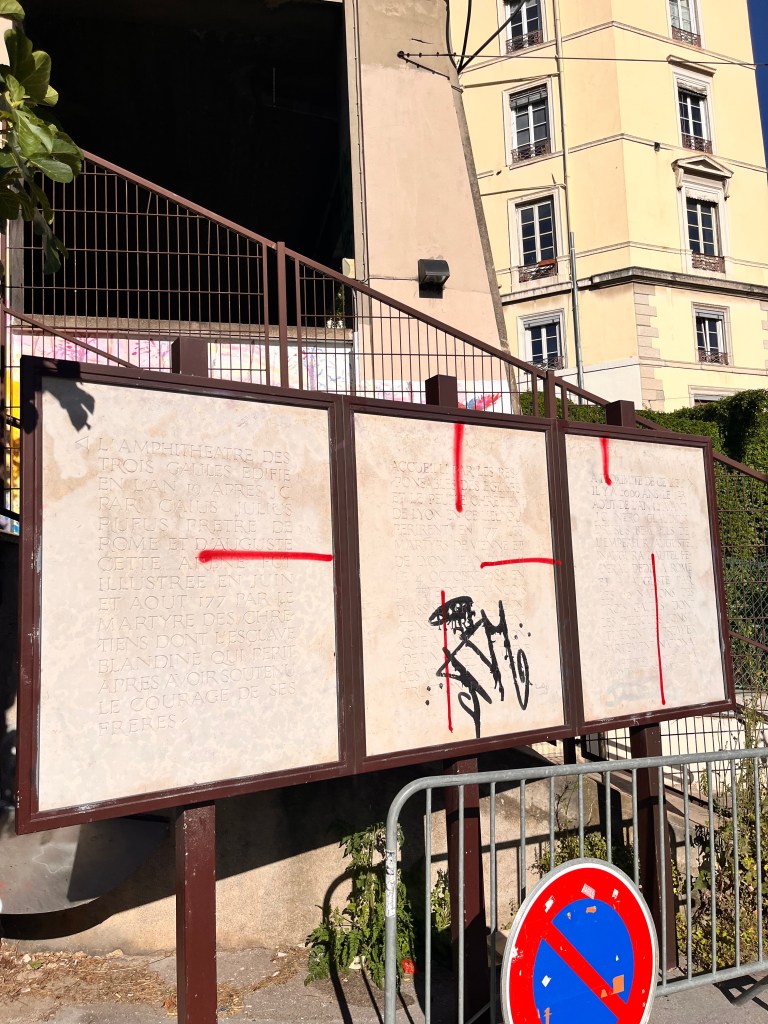

So what is this site about?
The amphitheater was actually part of a larger complex called the “Sanctuary of the Three Gauls,” which was built in the 1st century AD under Augustus. It had the objective of strengthening Roman rule in the conquered Gallic provinces and developing the cult of the Emperor. Typical ingenious Roman solutions to expand their imperial and colonial power.
The sanctuary served as the political and religious center for the provinces of Gallia Lugdunensis, Gallia Belgica, and Aquitania, and, each year, representatives from the 60 Gallic tribes gathered in this complex to participate in ceremonies, offer sacrifices to Rome and Augustus, and discuss matters of regional governance.
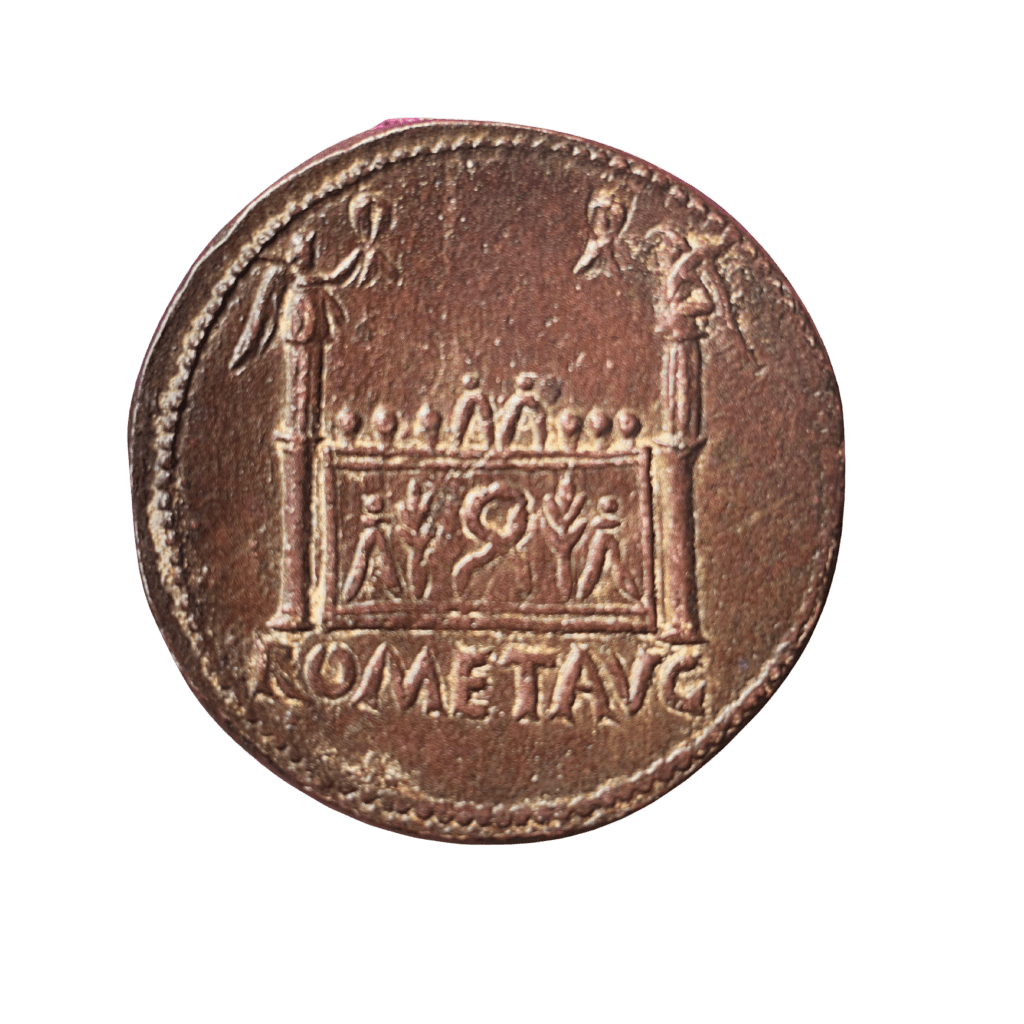
There is limited archaeological evidence regarding the main altar itself (and its exact location), but we have a depiction of how it looked like from a coin, with the text ROM<E>ETAVG<VSTUS>
The amphitheater itself, linked to this complex and with a capacity of up to 20,000 spectators, hosted public spectacles such as gladiatorial games and animal hunts, reinforcing Roman cultural practices and demonstrating the power of the Empire to local populations. The place is also highly significant for Christian history. In the year 177, during the first documented persecution of Christians in Gaul, six of the forty-seven martyrs of Lyon are thought to have been executed in this amphitheatre (according to the account by the historian Eusebius of Caesarea).
However, the site still holds many mysteries. The history of its construction is still debated, with the hypothesis of an earlier structure (for 6000 people) from approximately 19 CE, later refurbished and expanded in an unknown date. Only fragments of its superstructure survive, making it difficult to understand its full architecture or how exactly it integrated with the monumental ensemble of the Sanctuaire des Trois Gaules.
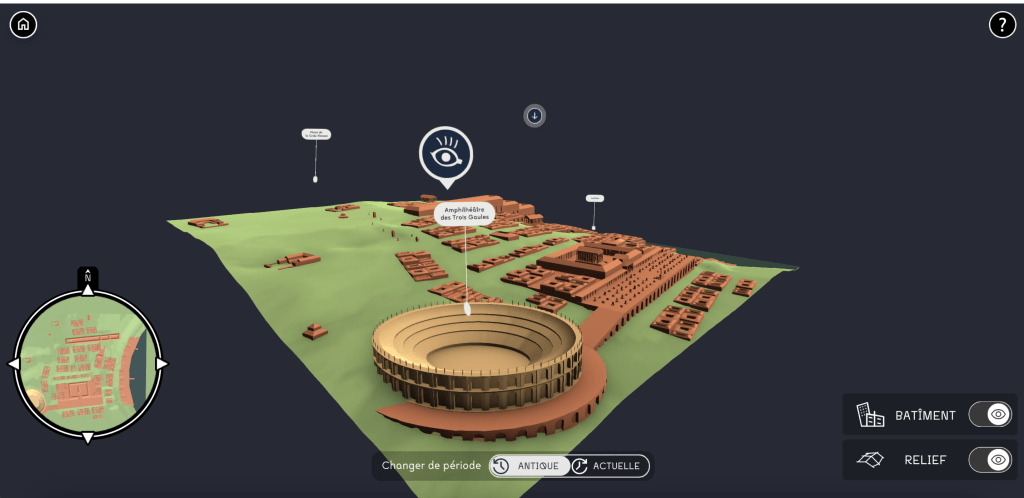
Another piece of this puzzle is the arêtes de poisson, a vast underground network discovered in the 1960s in the area. Unique in its layout and still difficult to interpret, its exact function remains uncertain. Some hypotheses suggest it may have been connected to the rituals or logistics of the Sanctuaire des Trois Gaules, perhaps an underground storage facility, possibly for food supplies.
This site can be explored virtually through a very cool interactive tool by the City of Lyon.
https://aretesdepoisson.lyon.fr/visite/
Despite still being in use, the site gives the impression of being somewhat neglected, which is a pity, given how significant it is not only for the history of Lyon but for the history of Roman Gaul as a whole.
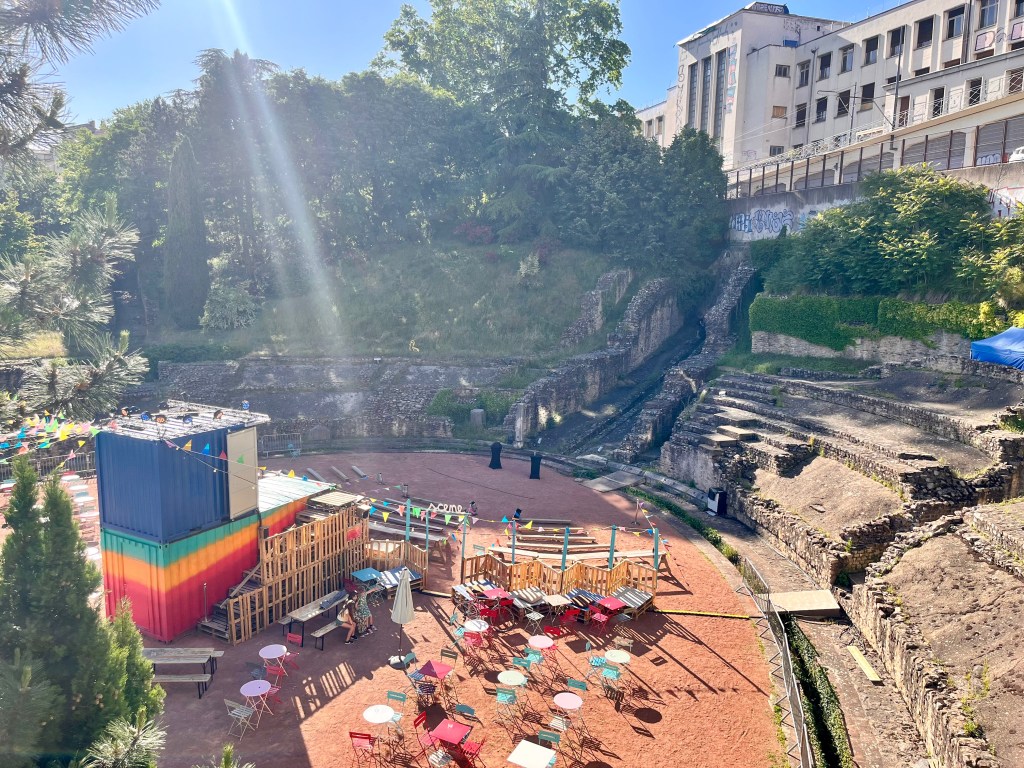
Still, it’s a very interesting place. A few surviving blocks of what was once an important complex and some of the first experiences in federalism (and maybe international cooperation?), now mostly hidden under modern Lyon.
References
Catherine Arlaud, editor. Lyon, les dessous de la Presqu’île. Alpara, 2000
André Pelletier, Guide du Lyon Gallo-Romain
Daniel Frascone, « Une nouvelle hypothèse sur le sanctuaire des Trois Gaules à Lyon », Revue archéologique de l’Est
François Richard et André Pelletier, Lyon et les origines du christianisme en Occident.
Les arêtes de poisson. Visite virtuelle. https://aretesdepoisson.lyon.fr/visite/
 Archaeo Notes
Leave a comment